
Water in your basement after rain — Fort Wayne
When water appears relative to the rain is the single most useful diagnostic a homeowner has — and it costs nothing to observe.
Who handles water after rain in Fort Wayne, IN?
Fort Wayne Basements diagnoses rain-triggered basement water in Fort Wayne by timing and entry point — separating surface-water problems, which are often inexpensive to fix, from hydrostatic pressure, which needs drainage. Call (260) 297-4131.
- Typical cost: $3,000–$12,000 in Allen County
- Soil: Blount-Pewamo-Glynwood glacial till — dense, high clay, poor drainage
- Frost depth: 42" — footings and discharge lines must sit below it
- Code: Indiana Residential Code (675 IAC 14-4.4), based on the 2018 IRC
- Service area: Fort Wayne and 9 surrounding counties, 45-mile radius
Within the hour means surface water
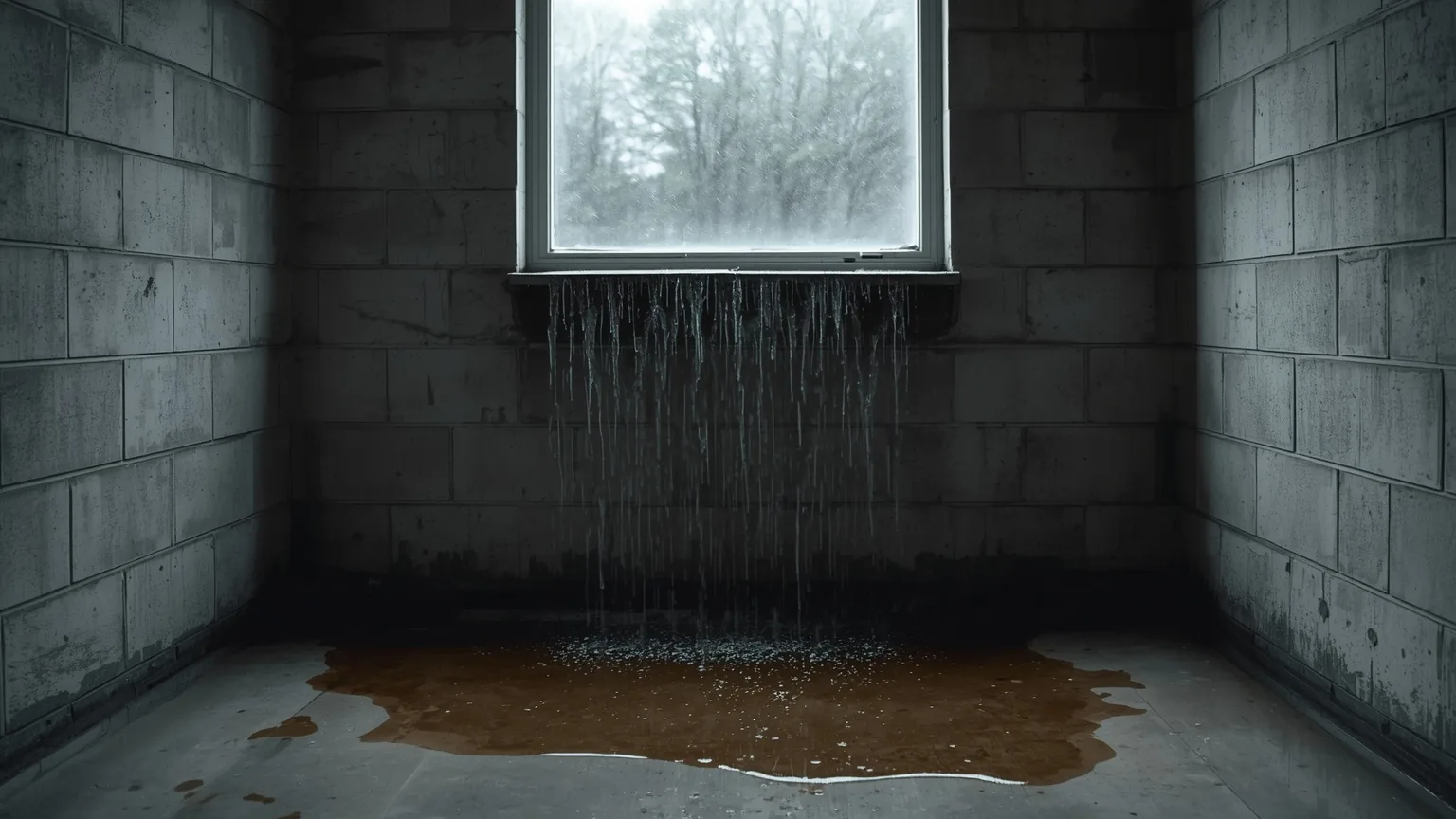
Water appearing during or immediately after rain has not travelled through soil — it is arriving over the top of the foundation, through a window well with no drain, or down along the wall from a downspout discharging at the house.
That is the good news scenario. Extending downspouts, correcting grade, and draining window wells are inexpensive and frequently resolve it completely.
A day later means the water table
Water appearing a day or two after rain, or during a wet spring with no immediate storm, means the ground has saturated and the water table has risen against the foundation. That is hydrostatic pressure and no amount of exterior tidying fixes it.
In Allen County's dense clay this is the more common pattern, and it needs a drainage system that relieves the pressure rather than a sealant that resists it.
Why Allen County soil drives this
Allen County sits on Blount-Pewamo-Glynwood soils — dense, high-clay glacial till left by the Wisconsin glaciation. Clay holds water against foundation walls instead of draining it, which is why hydrostatic pressure, not rainfall alone, is the dominant cause of wet basements here.
Glynwood and Blount clays shrink in drought and swell when saturated, cycling pressure against foundation walls — the mechanism behind most horizontal cracking and inward bowing in Fort Wayne block walls. A saturated clay backfill can exert well over 1,000 lb of lateral force per linear foot against a block wall — enough to bow an 8-inch wall inward without any visible exterior cause
The confluence of the St. Marys, St. Joseph and Maumee rivers keeps the water table high across much of the city, and the 1982 flood of record remains the benchmark for low-lying basement risk. In the older core neighborhoods the problem compounds — allen county's core neighborhoods — west central, williams woodland park, lakeside, forest park — are dominated by pre-1940 housing with poured or block foundations that predate modern drain tile and damproofing entirely.
Water After Rain questions
Why does my basement only get water after heavy rain?
If it appears within an hour, it is surface water — grading, downspouts, or window wells. If it appears a day or more later, the rain has saturated the clay and raised the water table, which is hydrostatic pressure. The delay is the diagnostic, and it points to two very different repairs.
Can extending my downspouts really fix it?
Sometimes entirely. A downspout discharging at the foundation can deliver hundreds of gallons directly against the wall during a single storm. Extending discharge six to ten feet away, along with correcting negative grade, is the cheapest intervention available and resolves a meaningful share of rain-triggered leaks.
What if I have both patterns?
Many Fort Wayne homes do — some water immediately from surface sources, more later from the rising water table. The right sequence is to fix the exterior first because it is cheap, then reassess. Sometimes it is enough on its own; when it is not, you have at least reduced the load on whatever drainage system follows.
Related emergency services
Find out what's actually causing it.
A free on-site inspection and a written scope — before any work is quoted.