
Basement waterproofing in Fort Wayne
A wet Fort Wayne basement is almost never a rainfall problem — it is a clay problem. Blount and Glynwood till holds water against your foundation instead of draining it, and that pressure finds the weakest joint in the wall.
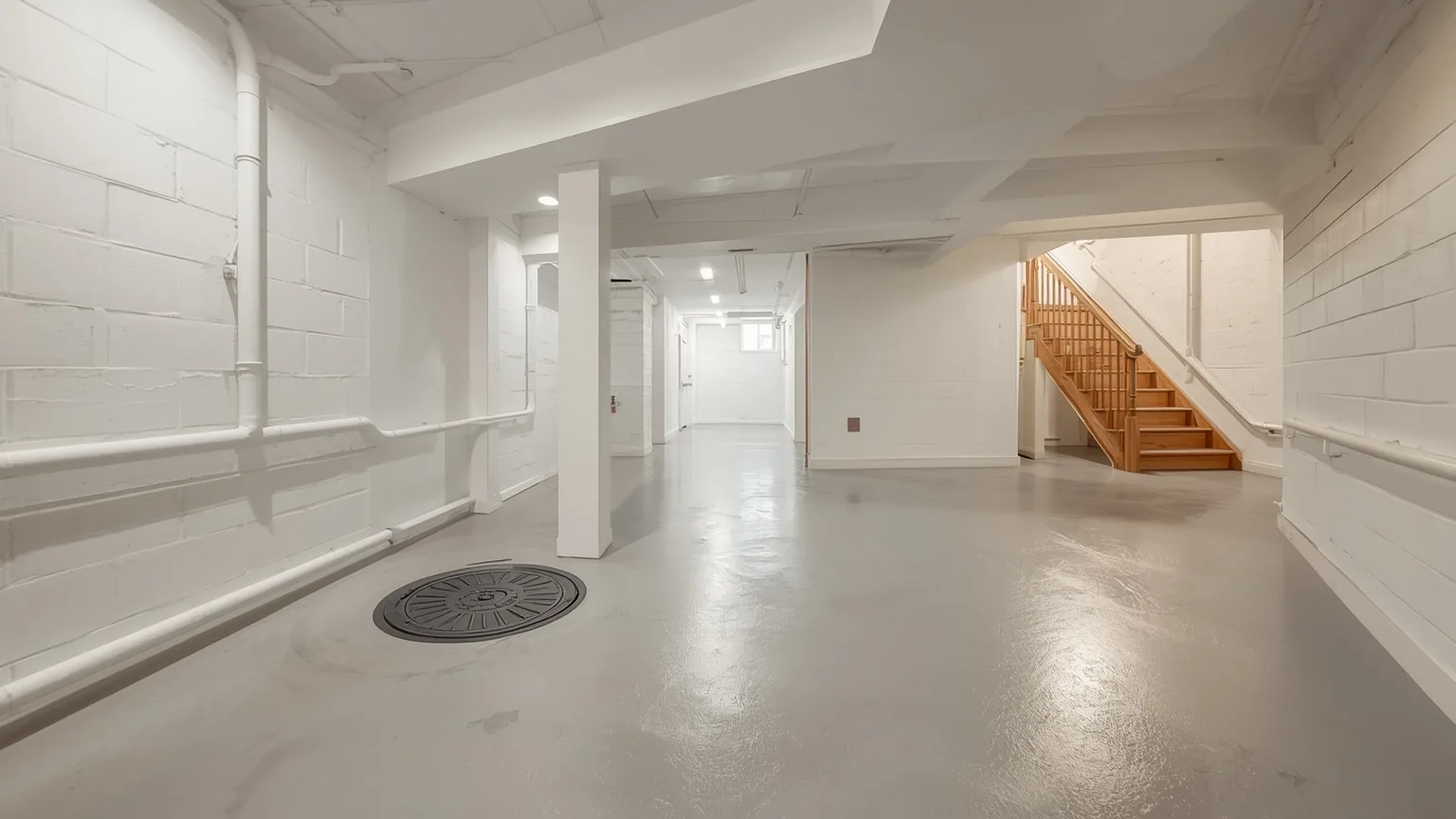
Who handles basement waterproofing in Fort Wayne, IN?
Fort Wayne Basements handles basement waterproofing across Fort Wayne and Allen County — interior drain tile, sump systems, exterior membrane, and wall stabilization sized for Northeast Indiana's dense glacial clay. Free on-site inspection and a written scope before any work begins. Call (260) 297-4131.
- Typical cost: $3,000–$12,000 in Allen County
- Soil: Blount-Pewamo-Glynwood glacial till — dense, high clay, poor drainage
- Frost depth: 42" — footings and discharge lines must sit below it
- Code: Indiana Residential Code (675 IAC 14-4.4), based on the 2018 IRC
- Service area: Fort Wayne and 9 surrounding counties, 45-mile radius
Why Fort Wayne basements leak
Allen County sits on Blount-Pewamo-Glynwood soils — dense, high-clay glacial till left behind by the Wisconsin glaciation. Clay does not drain. When it saturates, water sits against your foundation wall and pushes, and a saturated clay backfill can exert well over 1,000 pounds of lateral force per linear foot.
That pressure is why the fix is drainage, not sealant. Paint-on coatings and hydraulic cement address the symptom at the wall face while the water table outside stays exactly where it was. Relieving the pressure — routing water to a drain and out — is what actually stops the leak.
What a permanent system looks like
For most Fort Wayne homes the answer is an interior perimeter drain: the slab edge is opened, drain tile is set in washed stone below the floor at the footing, and everything discharges to a sealed sump basin with a pump rated for the volume. Water that reaches the wall is captured before it reaches the floor.
Where the wall itself has moved — horizontal cracking, inward bow, step cracking in block — drainage alone is not enough, and stabilization has to be part of the same scope. Fixing water without addressing movement leaves you with a dry basement and a wall that is still failing.
Why Allen County soil drives this
Allen County sits on Blount-Pewamo-Glynwood soils — dense, high-clay glacial till left by the Wisconsin glaciation. Clay holds water against foundation walls instead of draining it, which is why hydrostatic pressure, not rainfall alone, is the dominant cause of wet basements here.
Glynwood and Blount clays shrink in drought and swell when saturated, cycling pressure against foundation walls — the mechanism behind most horizontal cracking and inward bowing in Fort Wayne block walls. A saturated clay backfill can exert well over 1,000 lb of lateral force per linear foot against a block wall — enough to bow an 8-inch wall inward without any visible exterior cause
The confluence of the St. Marys, St. Joseph and Maumee rivers keeps the water table high across much of the city, and the 1982 flood of record remains the benchmark for low-lying basement risk. In the older core neighborhoods the problem compounds — allen county's core neighborhoods — west central, williams woodland park, lakeside, forest park — are dominated by pre-1940 housing with poured or block foundations that predate modern drain tile and damproofing entirely.
Basement Waterproofing questions
How much does basement waterproofing cost in Fort Wayne?
Most Fort Wayne basement waterproofing projects run $3,000–$12,000, driven mainly by linear footage and whether the wall needs structural work. A partial interior system on one problem wall sits at the low end; a full perimeter system with a new sump and wall stabilization sits at the high end. Exterior excavation waterproofing is a different scope and costs considerably more.
Does sealing the walls from inside fix a wet basement?
Rarely, and not permanently. Waterproof paint and hydraulic cement resist water at the wall face but do nothing about hydrostatic pressure in the clay outside. In Allen County's Blount and Glynwood soils that pressure is the actual cause — coatings typically fail within a season or two, and often just move the leak to the cove joint where the wall meets the floor.
How long does the work take?
A typical interior perimeter system in a Fort Wayne home takes two to four days depending on footage and access. Crack injection is same-day. Exterior excavation is the long one — a week or more, weather permitting, since the trench has to stay open.
Will waterproofing stop the musty smell?
Usually, because the smell is airborne mold and mineral salts feeding on chronic moisture. Once the water source is cut off and the space dries, the odor source is gone. Materials already colonized — carpet pad, finished drywall, stored cardboard — still need removal; drying alone does not reverse growth that has already taken hold.
Do I need a permit in Fort Wayne?
Interior drainage and sump work generally does not require a building permit, but structural foundation repair and cutting an egress window do — those go through the Allen County Building Department or City of Fort Wayne Community Development. Note also that City Utilities prohibits discharging a sump into the sanitary sewer; the line has to go to grade or storm.
Related waterproofing services
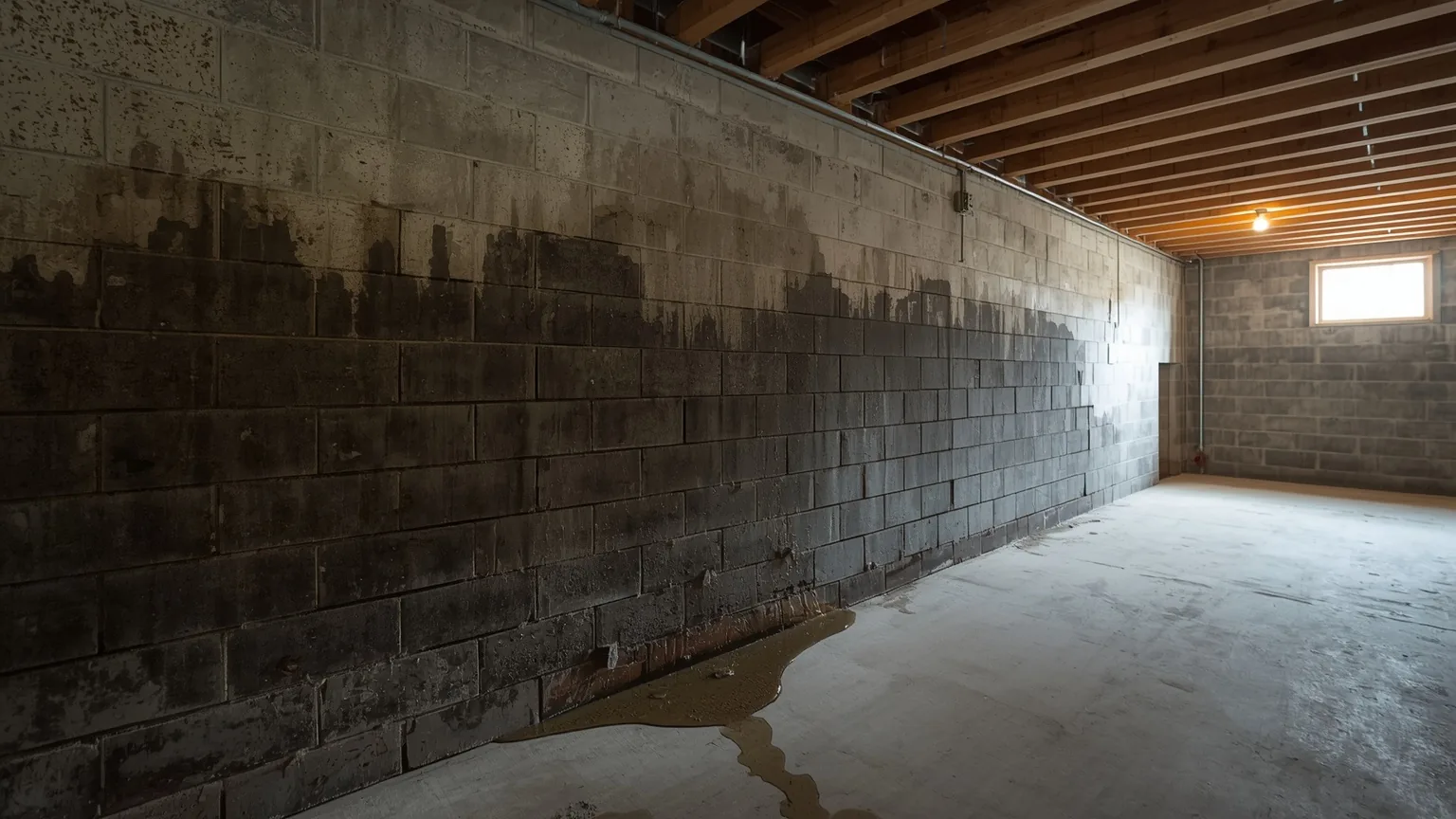
Wet Basement Repair
Water shows up in a basement through a small number of predictable paths. Finding which one is the whole job — the repair is straightforward once the entry point is known.
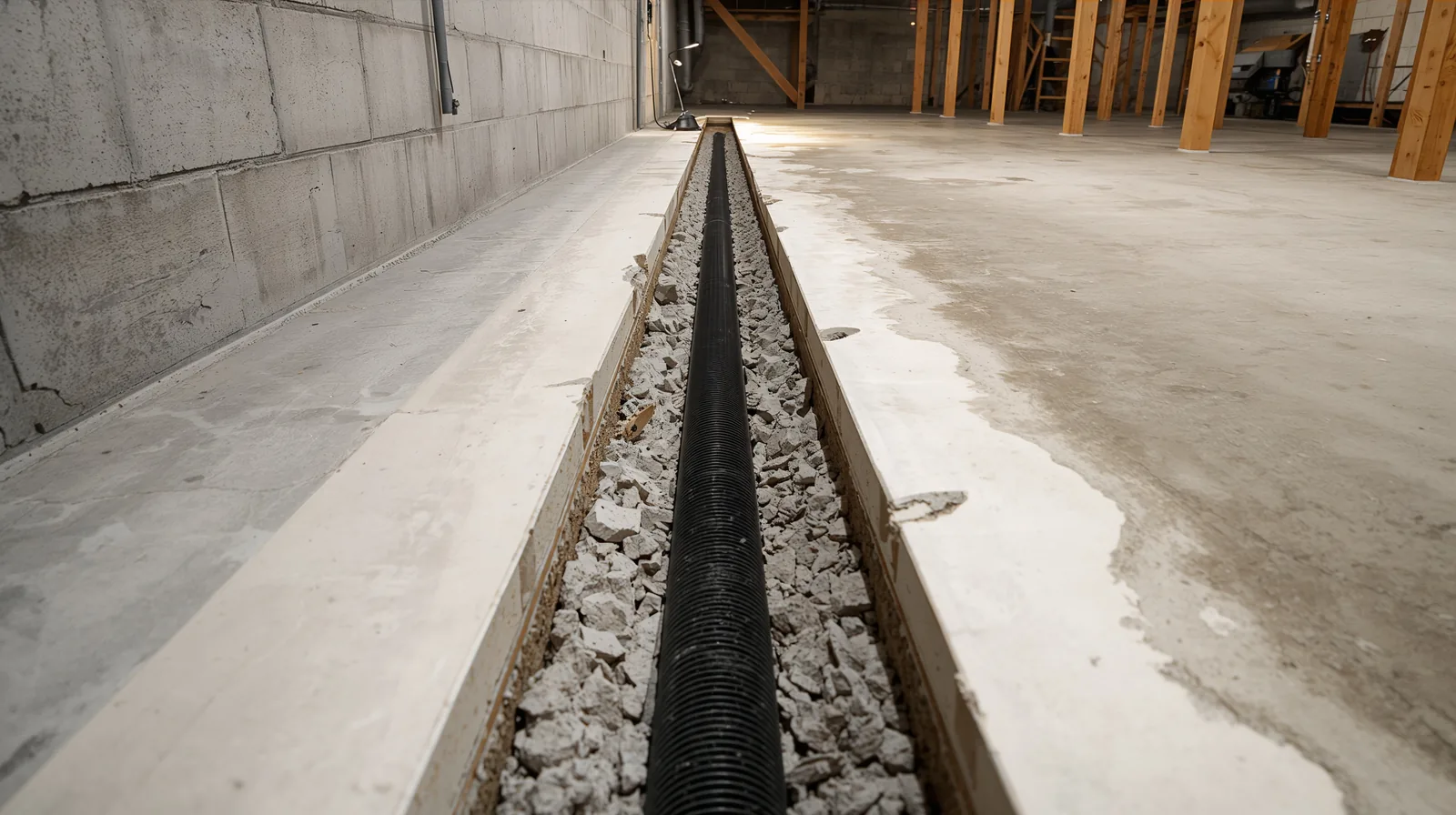
Interior Drain Tile
Interior drain tile is the workhorse repair for Fort Wayne basements: it relieves the hydrostatic pressure that clay soils create, without excavating the yard.
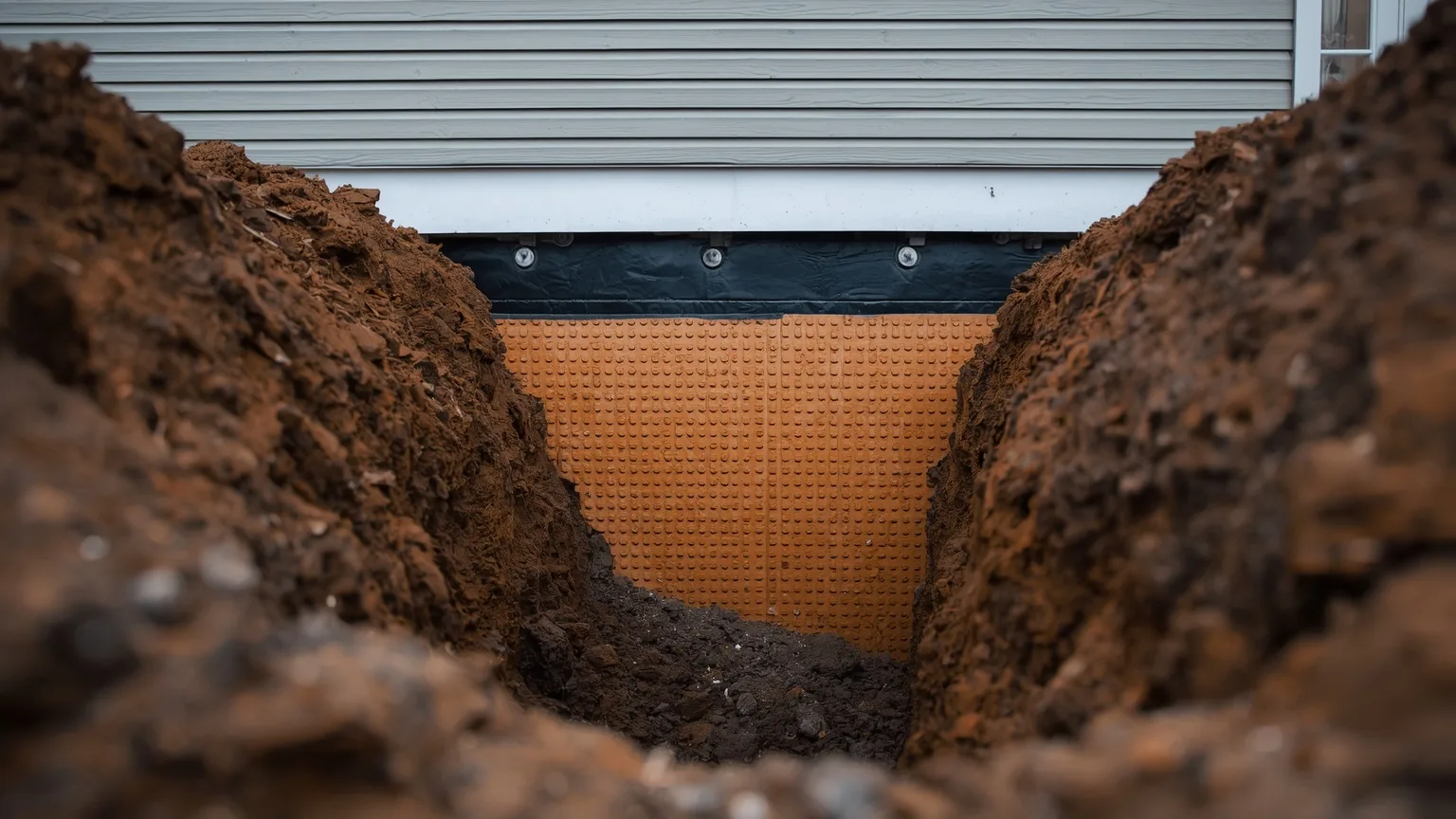
Exterior Basement Waterproofing
Exterior waterproofing stops water at the outside face of the wall, before it ever reaches the structure. It is the most thorough repair — and the most disruptive.
Find out what's actually causing it.
A free on-site inspection and a written scope — before any work is quoted.