
Basement drainage systems in Fort Wayne
A drainage system is not a product; it is a path. Water has to be intercepted, carried, lifted, and discharged somewhere it cannot return from.
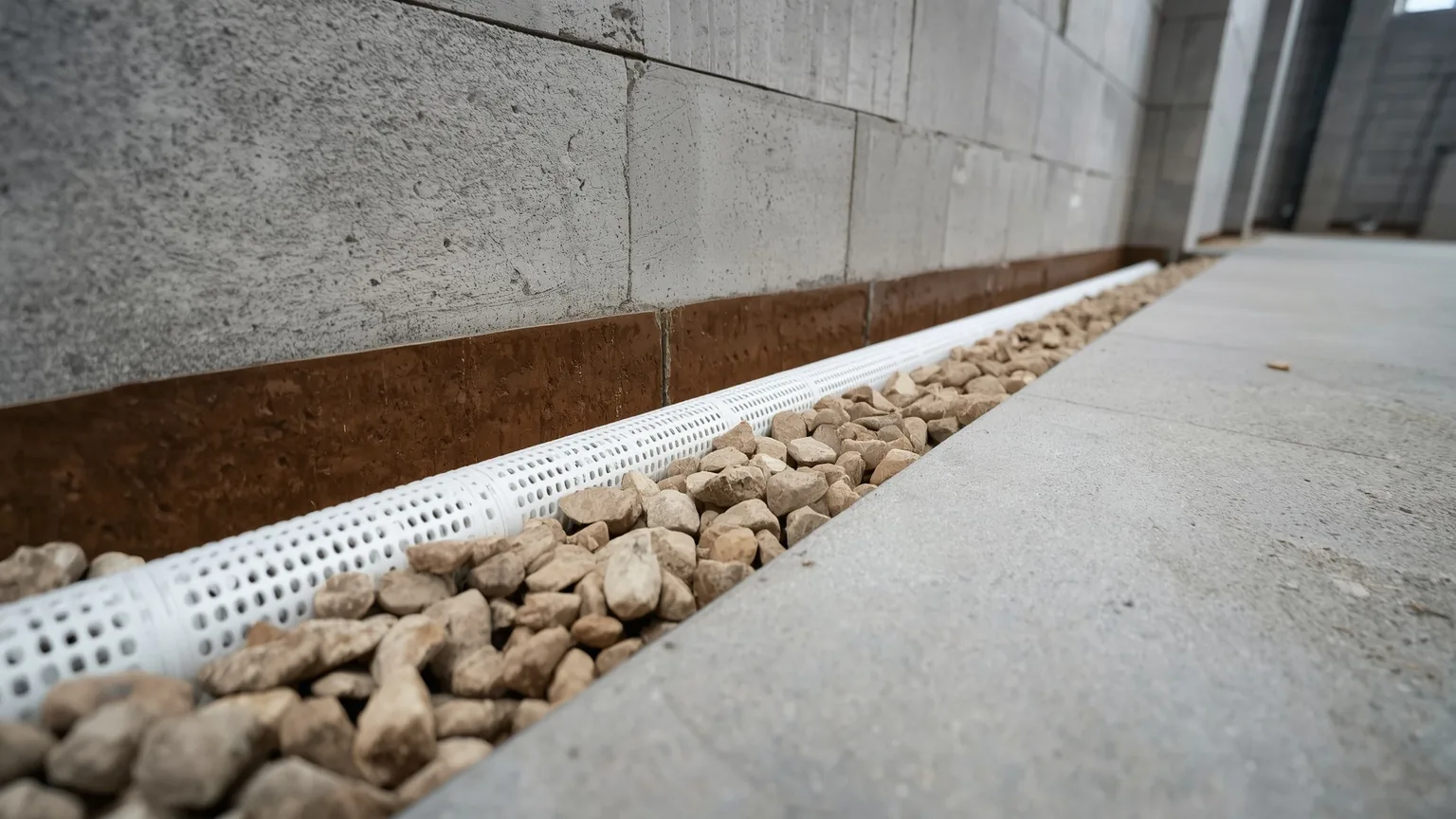
Who handles basement drainage systems in Fort Wayne, IN?
Fort Wayne Basements designs and installs complete basement drainage systems in Fort Wayne — interception at the footing, conveyance to a sealed sump, correctly sized pumping, and discharge that meets City Utilities rules. Call (260) 297-4131.
- Typical cost: $5,000–$15,000 in Allen County
- Soil: Blount-Pewamo-Glynwood glacial till — dense, high clay, poor drainage
- Frost depth: 42" — footings and discharge lines must sit below it
- Code: Indiana Residential Code (675 IAC 14-4.4), based on the 2018 IRC
- Service area: Fort Wayne and 9 surrounding counties, 45-mile radius
The four parts
Interception captures water at the footing before it reaches the living space. Conveyance carries it to a low point without silting. Pumping lifts it out of the basin at a rate matching inflow. Discharge puts it far enough from the house that it does not simply recirculate to the drain tile.
Systems fail at whichever part was cheapest. An excellent pump on a frozen discharge line floods a basement exactly like no pump at all.
Interior and exterior together
Interior drainage handles the water table. Exterior grading, downspout extensions, and yard drains handle surface water. Many Fort Wayne homes need some of each, and treating them as one system is usually cheaper than solving them separately.
The cheapest interventions are almost always outside: downspouts discharging six feet from the foundation instead of at it, and positive grade away from the wall. Those get evaluated first because they sometimes remove the need for the larger job.
Why Allen County soil drives this
Allen County sits on Blount-Pewamo-Glynwood soils — dense, high-clay glacial till left by the Wisconsin glaciation. Clay holds water against foundation walls instead of draining it, which is why hydrostatic pressure, not rainfall alone, is the dominant cause of wet basements here.
Glynwood and Blount clays shrink in drought and swell when saturated, cycling pressure against foundation walls — the mechanism behind most horizontal cracking and inward bowing in Fort Wayne block walls. A saturated clay backfill can exert well over 1,000 lb of lateral force per linear foot against a block wall — enough to bow an 8-inch wall inward without any visible exterior cause
The confluence of the St. Marys, St. Joseph and Maumee rivers keeps the water table high across much of the city, and the 1982 flood of record remains the benchmark for low-lying basement risk. In the older core neighborhoods the problem compounds — allen county's core neighborhoods — west central, williams woodland park, lakeside, forest park — are dominated by pre-1940 housing with poured or block foundations that predate modern drain tile and damproofing entirely.
Basement Drainage Systems questions
How is a drainage system different from waterproofing?
In practice they overlap heavily — most of what is sold as basement waterproofing in Fort Wayne is a drainage system. True waterproofing is a membrane applied to the outside face of the wall. Drainage manages the water so it never builds pressure. For most Allen County homes drainage is what actually delivers a dry basement.
Can part of the basement be done rather than the whole perimeter?
Yes, and it is often the right call when water enters consistently along one wall. A partial system costs proportionally less. The caution is that relieving pressure on one wall occasionally reveals a second entry point elsewhere, so the assessment should cover the full perimeter even if the work does not.
What maintenance does a drainage system need?
Very little. Test the pump each spring by filling the basin, keep the discharge outlet clear of mulch and ice, and replace the pump on age rather than failure. The buried components are effectively maintenance-free when installed with washed stone and filter fabric.
Related drainage services
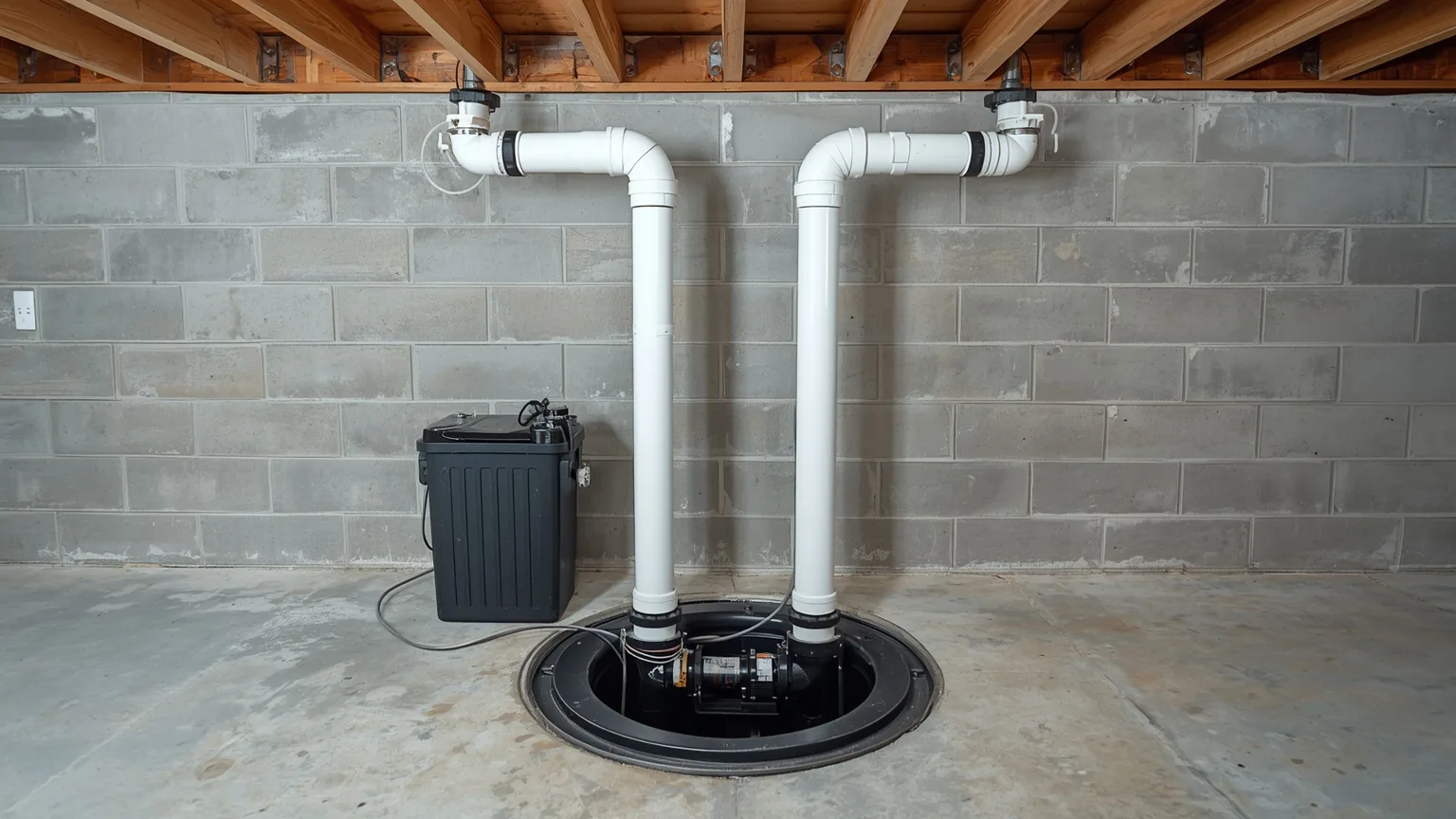
Sump Pump Installation
A sump pump is the discharge end of a drainage system. Sizing it correctly, and running the discharge somewhere legal, is what keeps a Fort Wayne basement dry through a wet spring.
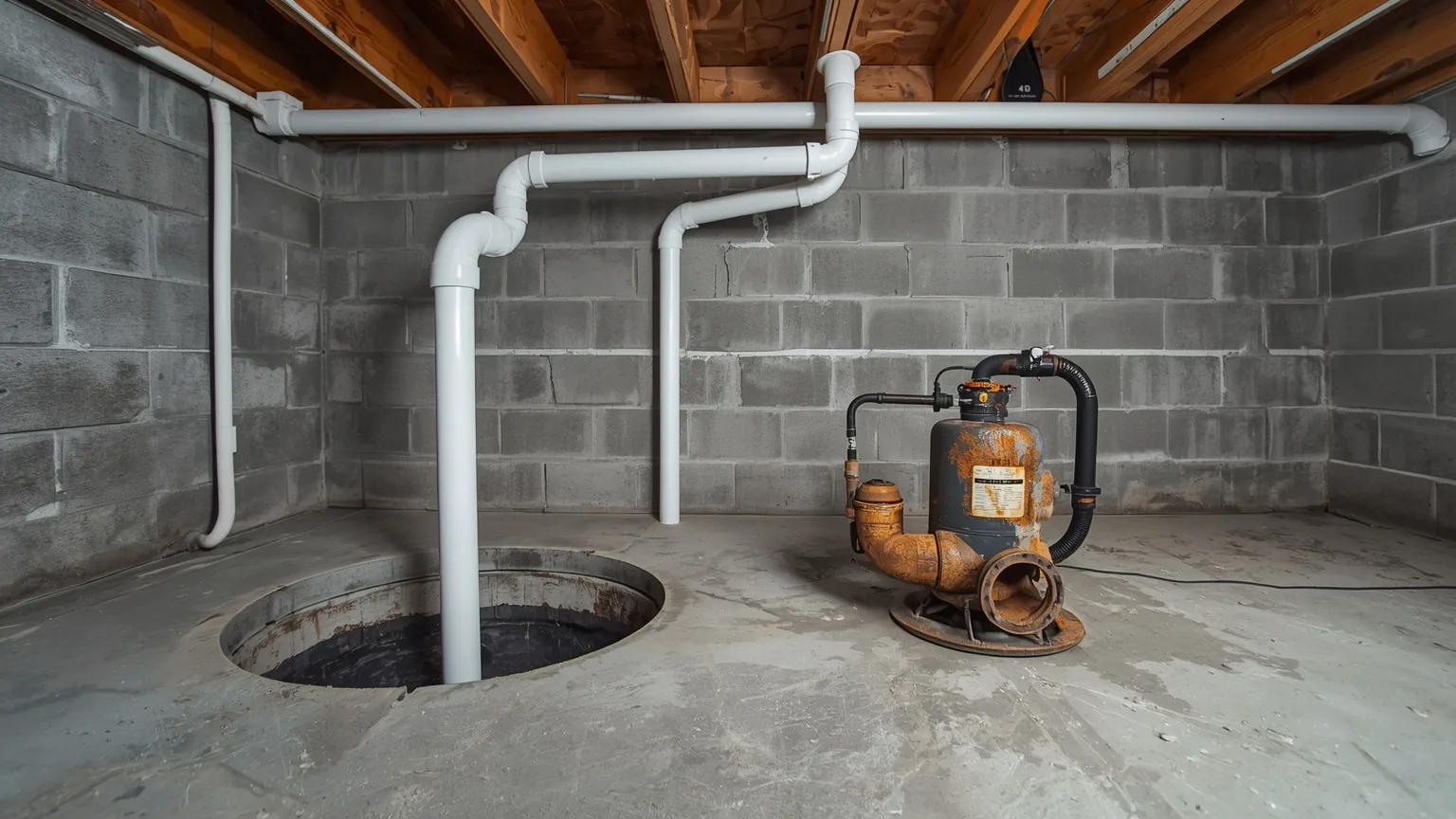
Sump Pump Replacement
Sump pumps fail on the day they matter. Replacing on age rather than on failure is the cheapest insurance a Fort Wayne basement has.
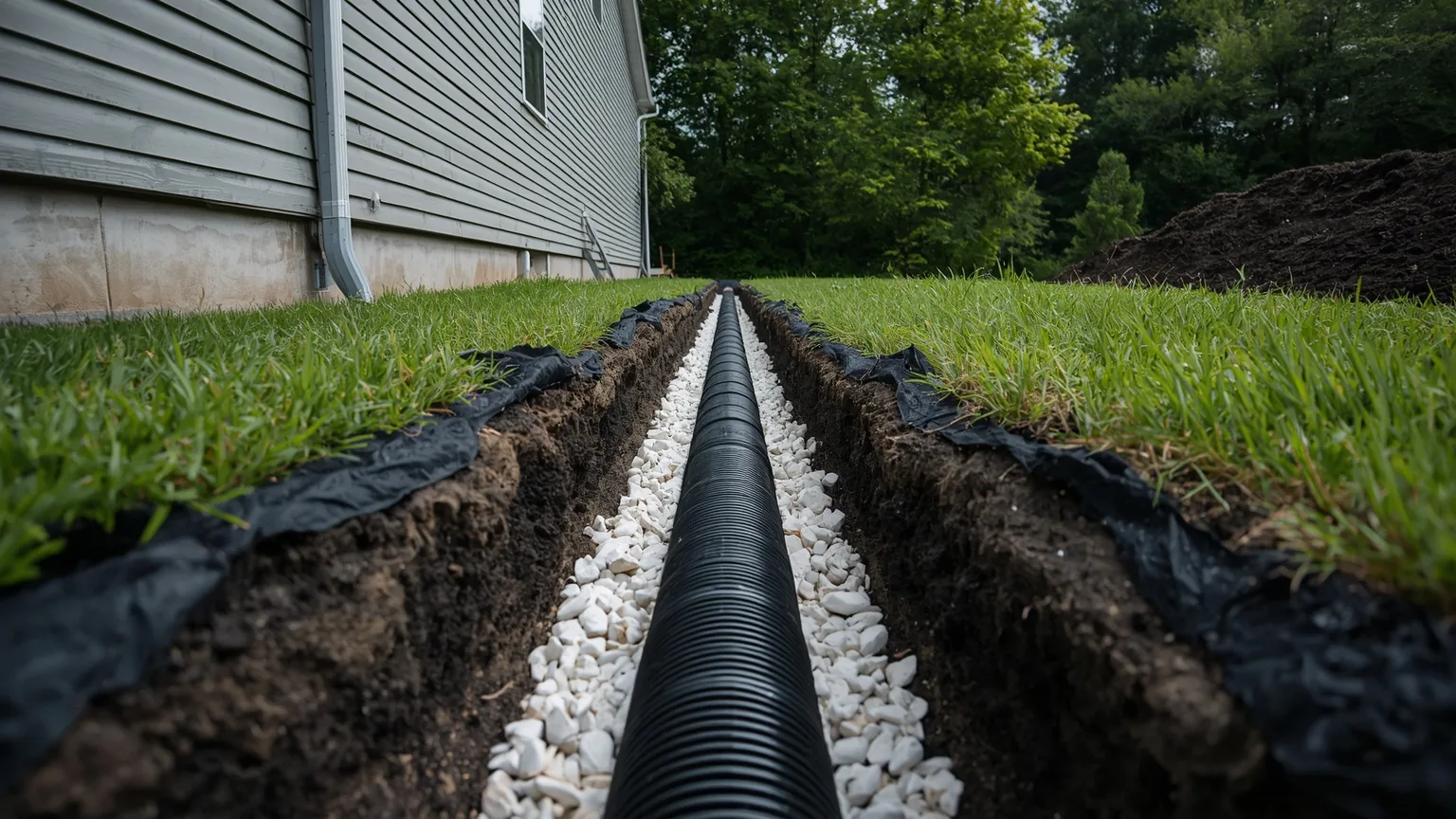
French Drain Installation
In dense Allen County clay, water that cannot soak in has to go somewhere. A French drain gives it a path that does not run past your foundation.
Find out what's actually causing it.
A free on-site inspection and a written scope — before any work is quoted.