
French drain installation in Fort Wayne
In dense Allen County clay, water that cannot soak in has to go somewhere. A French drain gives it a path that does not run past your foundation.
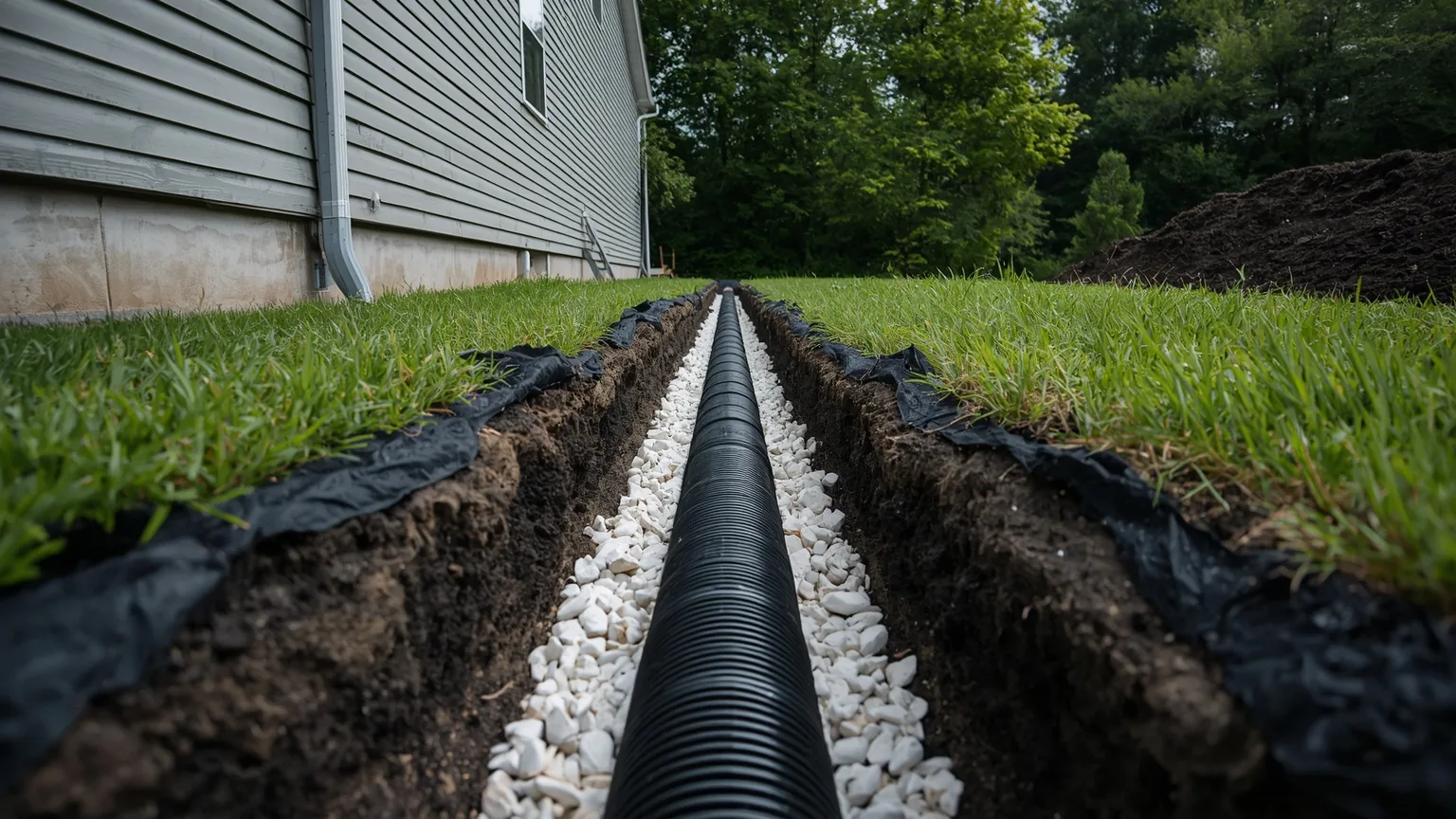
Who handles french drain installation in Fort Wayne, IN?
Fort Wayne Basements installs exterior French drains and yard drainage across Fort Wayne — perforated pipe in washed stone with filter fabric, pitched to daylight, sized for Allen County's low-permeability clay. Call (260) 297-4131.
- Typical cost: $2,500–$8,000 in Allen County
- Soil: Blount-Pewamo-Glynwood glacial till — dense, high clay, poor drainage
- Frost depth: 42" — footings and discharge lines must sit below it
- Code: Indiana Residential Code (675 IAC 14-4.4), based on the 2018 IRC
- Service area: Fort Wayne and 9 surrounding counties, 45-mile radius
What a French drain actually does
A French drain is perforated pipe bedded in washed stone and wrapped in filter fabric, pitched so gravity carries intercepted water away. It handles both surface runoff and shallow subsurface flow, which is precisely the problem in clay soils where water moves sideways across the top of the clay rather than down through it.
The filter fabric is not optional. Without it, clay fines migrate into the stone and the drain silts closed — often within a few seasons. A drain installed without fabric in Blount clay is a drain with an expiry date.
Where it belongs
Along the uphill side of a house that sits below grade, across a yard that holds standing water, at the base of a slope that sheds toward the foundation, or around a patio or driveway that concentrates runoff. In Woodburn and the flat eastern townships, surface drainage is often the entire problem.
It needs somewhere to go. On a flat Allen County lot with no daylight outlet, a French drain may need a dry well or a pump — and that constraint has to be identified before the trench is dug, not after.
Why Allen County soil drives this
Allen County sits on Blount-Pewamo-Glynwood soils — dense, high-clay glacial till left by the Wisconsin glaciation. Clay holds water against foundation walls instead of draining it, which is why hydrostatic pressure, not rainfall alone, is the dominant cause of wet basements here.
Glynwood and Blount clays shrink in drought and swell when saturated, cycling pressure against foundation walls — the mechanism behind most horizontal cracking and inward bowing in Fort Wayne block walls. A saturated clay backfill can exert well over 1,000 lb of lateral force per linear foot against a block wall — enough to bow an 8-inch wall inward without any visible exterior cause
The confluence of the St. Marys, St. Joseph and Maumee rivers keeps the water table high across much of the city, and the 1982 flood of record remains the benchmark for low-lying basement risk. In the older core neighborhoods the problem compounds — allen county's core neighborhoods — west central, williams woodland park, lakeside, forest park — are dominated by pre-1940 housing with poured or block foundations that predate modern drain tile and damproofing entirely.
French Drain Installation questions
How much does a French drain cost in Fort Wayne?
Exterior French drains typically run $2,500–$8,000 depending on length, depth, and whether the outlet daylights naturally or needs a dry well or pump. Clay excavation is slower than sandy soil, which is reflected in Allen County pricing.
Will a French drain fix water in my basement?
It will if the water is surface or shallow subsurface — arriving within an hour of heavy rain, entering over the top of the wall or through window wells. It will not fix a rising water table pushing water up through the cove joint; that needs interior drainage. The timing of the leak tells you which you have.
How deep does it need to be?
Yard drains intercepting surface water sit 12 to 24 inches deep. A drain protecting a foundation needs to reach footing level to be effective, which in Fort Wayne means excavating alongside the foundation and generally makes it part of an exterior waterproofing scope rather than a standalone yard drain.
Related drainage services
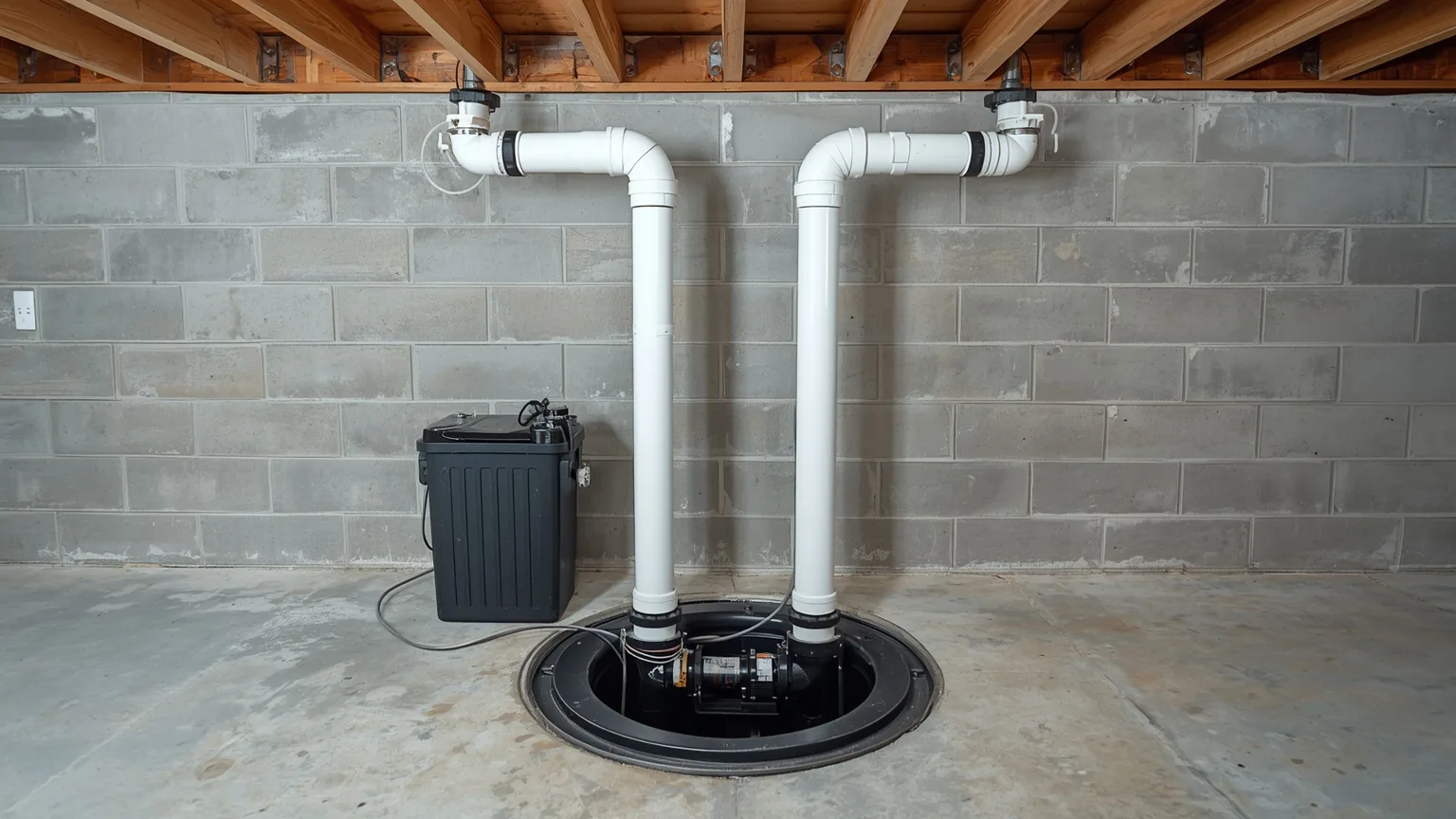
Sump Pump Installation
A sump pump is the discharge end of a drainage system. Sizing it correctly, and running the discharge somewhere legal, is what keeps a Fort Wayne basement dry through a wet spring.
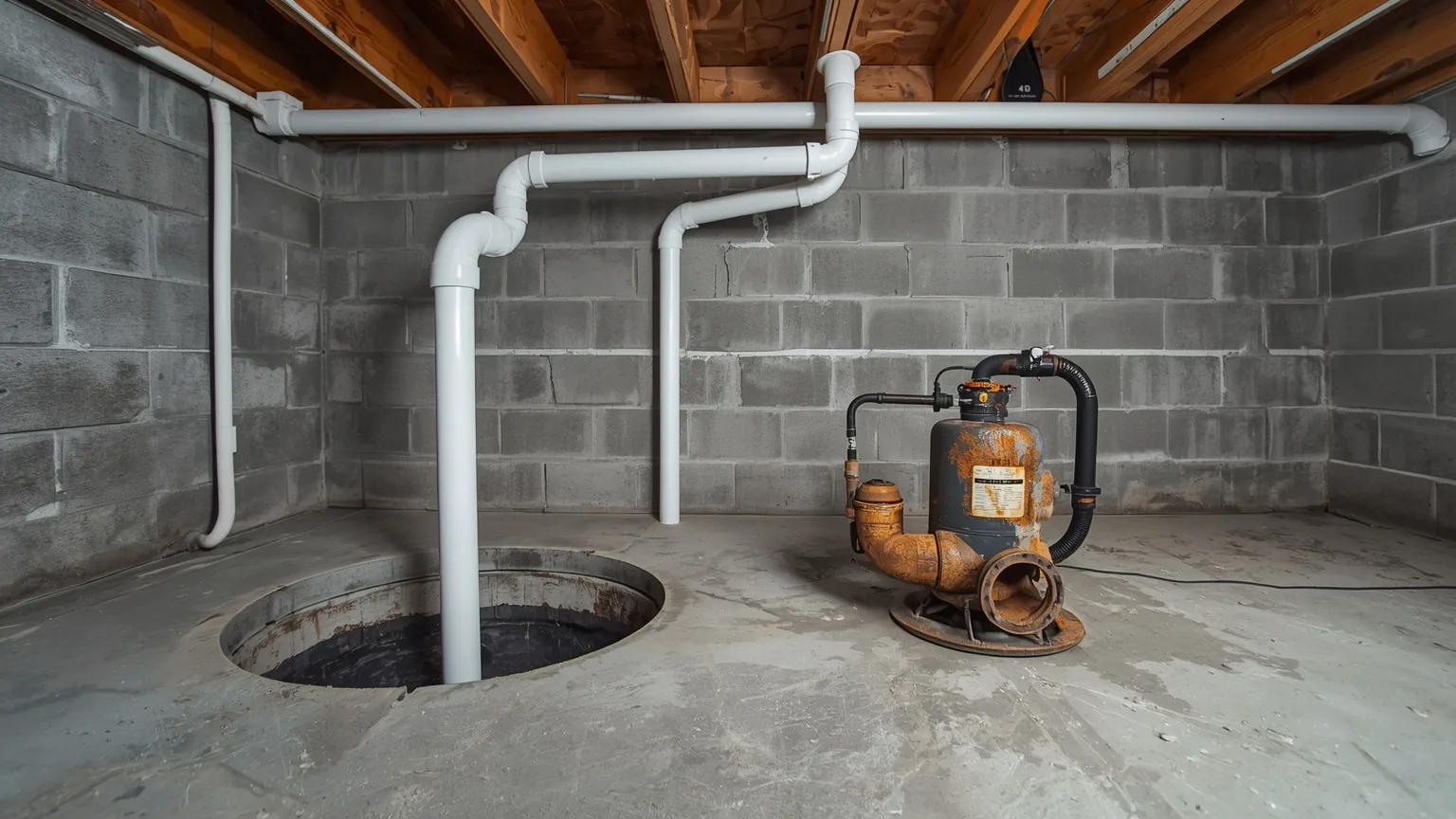
Sump Pump Replacement
Sump pumps fail on the day they matter. Replacing on age rather than on failure is the cheapest insurance a Fort Wayne basement has.
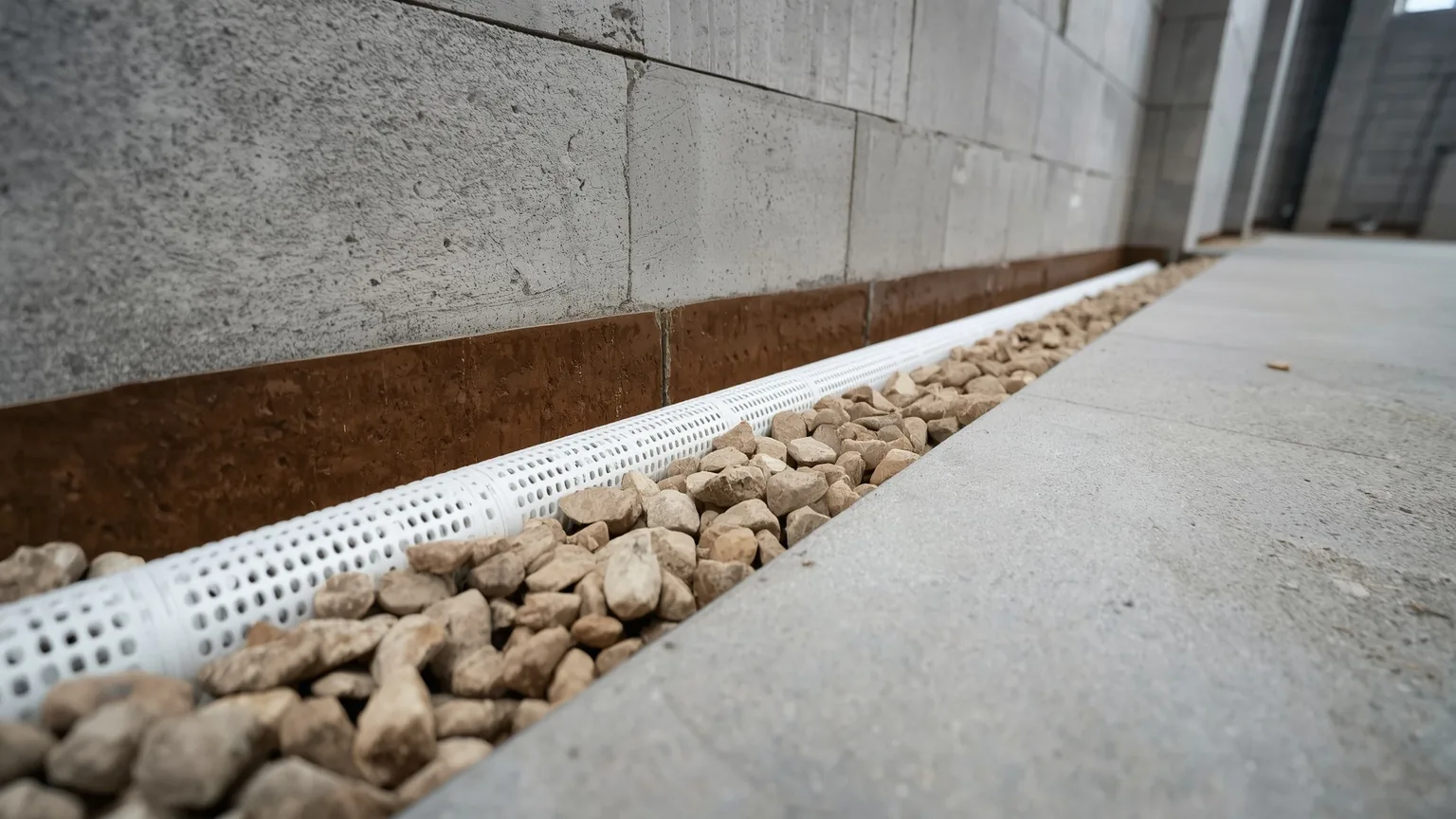
Basement Drainage Systems
A drainage system is not a product; it is a path. Water has to be intercepted, carried, lifted, and discharged somewhere it cannot return from.
Find out what's actually causing it.
A free on-site inspection and a written scope — before any work is quoted.