
Interior drain tile installation in Fort Wayne
Interior drain tile is the workhorse repair for Fort Wayne basements: it relieves the hydrostatic pressure that clay soils create, without excavating the yard.
Who handles interior drain tile in Fort Wayne, IN?
Fort Wayne Basements installs interior perimeter drain tile in Fort Wayne basements — perforated pipe set in washed stone below the slab at footing level, discharging to a sealed sump basin. Call (260) 297-4131.
- Typical cost: $5,000–$15,000 in Allen County
- Soil: Blount-Pewamo-Glynwood glacial till — dense, high clay, poor drainage
- Frost depth: 42" — footings and discharge lines must sit below it
- Code: Indiana Residential Code (675 IAC 14-4.4), based on the 2018 IRC
- Service area: Fort Wayne and 9 surrounding counties, 45-mile radius
How it is installed
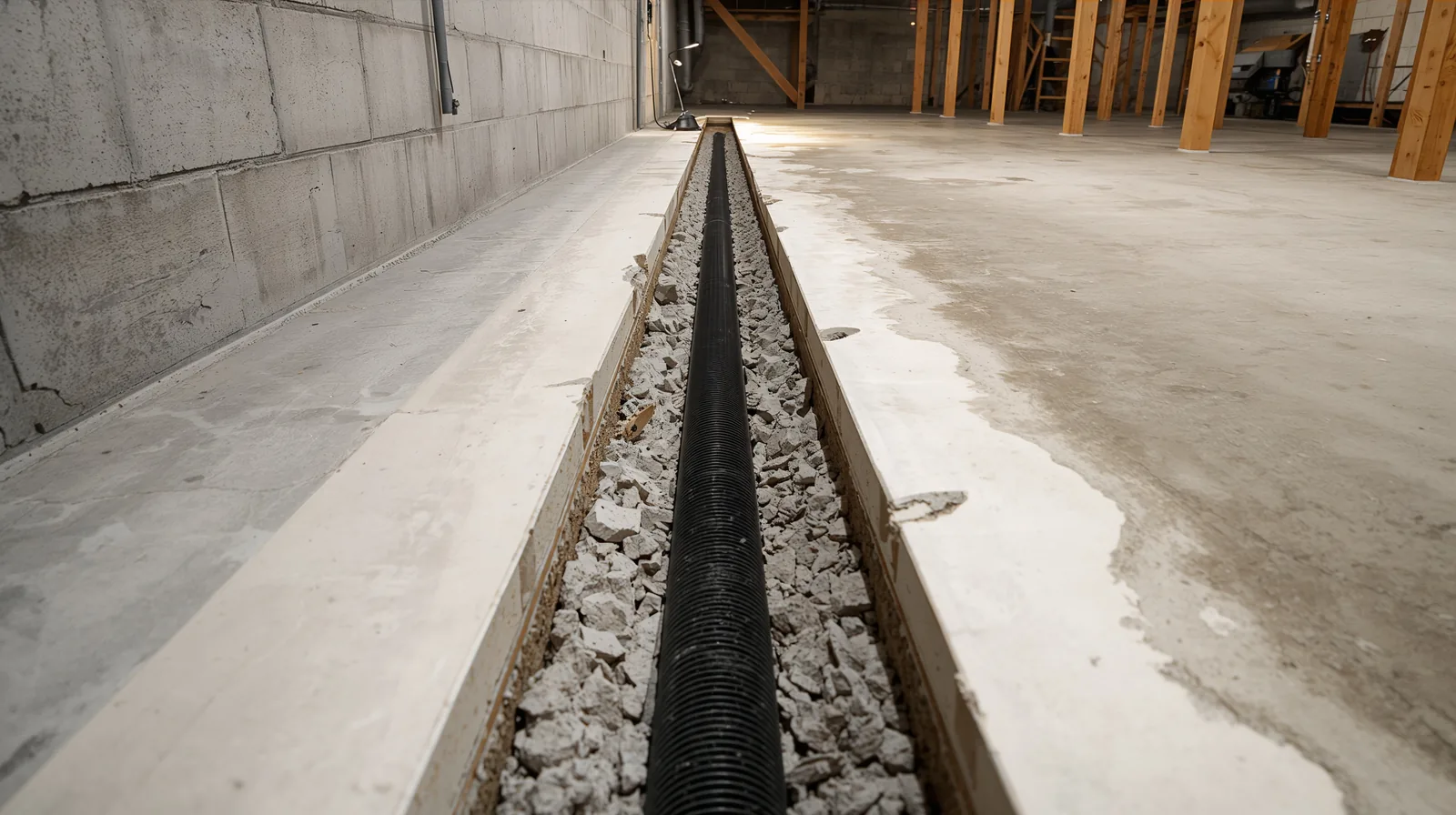
The crew opens a channel in the slab around the affected perimeter, excavates to footing level, and sets perforated pipe in washed stone. The pipe runs to a sealed sump basin fitted with a pump sized to the volume. The slab is then restored over the stone.
In block walls the courses are typically drilled at the base so water trapped inside the cores can drain into the system rather than sitting in the wall. That step matters in Fort Wayne, where block foundations are common and hollow cores hold a surprising amount of water.
Why interior rather than exterior
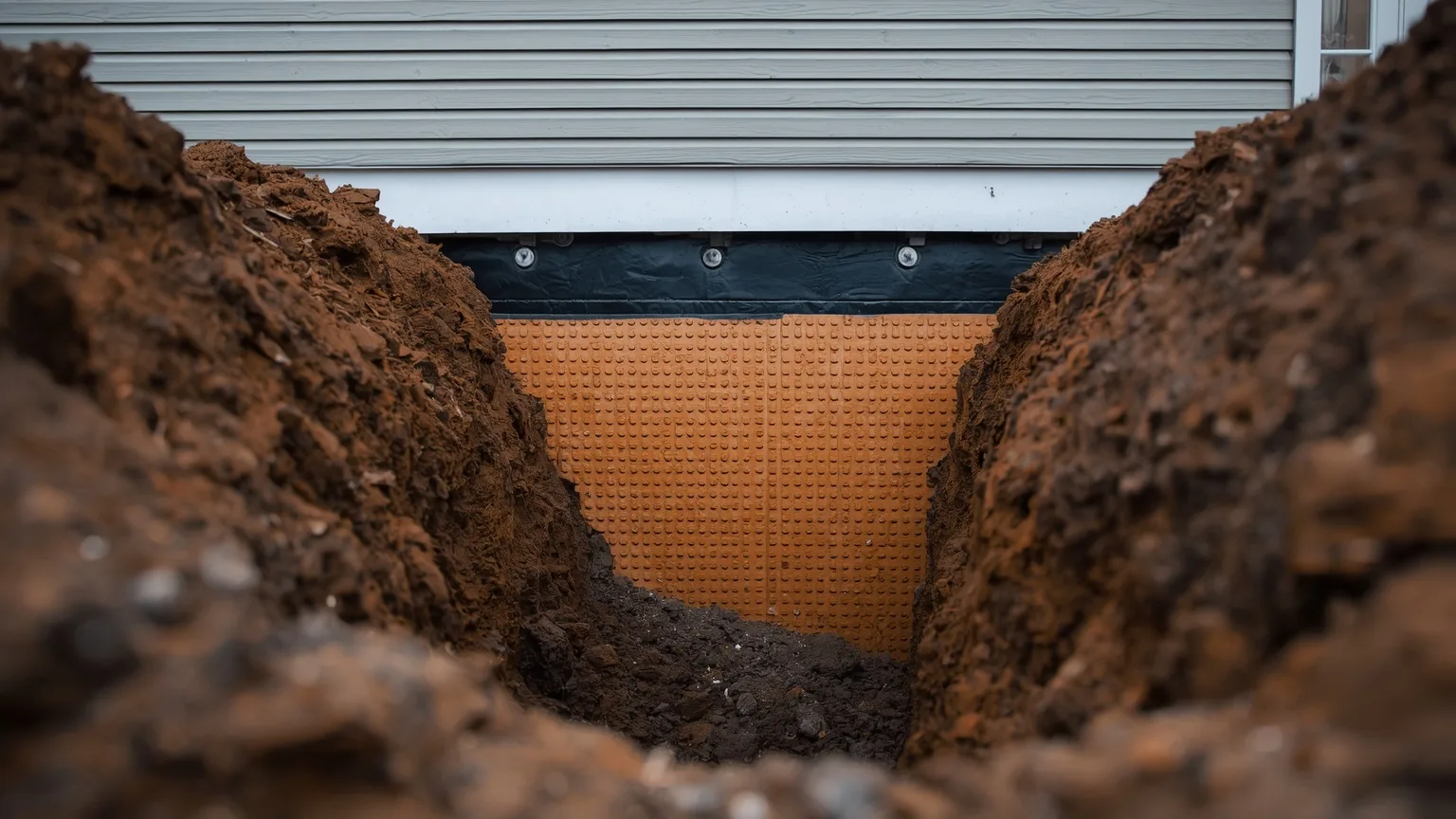
Exterior excavation waterproofing is the more complete repair in principle — it stops water at the outside face of the wall. In practice it costs two to three times as much, requires removing landscaping, decks, and sometimes driveways, and is weather-dependent.
Interior drain tile achieves the same functional result — relieving pressure so water never builds against the wall — at a fraction of the cost and disruption, and it can be installed in winter. For the large majority of Allen County homes it is the right call.
Why Allen County soil drives this
Allen County sits on Blount-Pewamo-Glynwood soils — dense, high-clay glacial till left by the Wisconsin glaciation. Clay holds water against foundation walls instead of draining it, which is why hydrostatic pressure, not rainfall alone, is the dominant cause of wet basements here.
Glynwood and Blount clays shrink in drought and swell when saturated, cycling pressure against foundation walls — the mechanism behind most horizontal cracking and inward bowing in Fort Wayne block walls. A saturated clay backfill can exert well over 1,000 lb of lateral force per linear foot against a block wall — enough to bow an 8-inch wall inward without any visible exterior cause
The confluence of the St. Marys, St. Joseph and Maumee rivers keeps the water table high across much of the city, and the 1982 flood of record remains the benchmark for low-lying basement risk. In the older core neighborhoods the problem compounds — allen county's core neighborhoods — west central, williams woodland park, lakeside, forest park — are dominated by pre-1940 housing with poured or block foundations that predate modern drain tile and damproofing entirely.
Interior Drain Tile questions
What does interior drain tile cost in Fort Wayne?
Interior perimeter systems typically run $5,000–$15,000 depending on linear footage, whether the full perimeter or one wall is treated, and whether a new sump basin and pump are included. Partial systems on a single problem wall cost proportionally less.
Does the concrete floor get destroyed?
No — only a channel roughly 12 to 16 inches wide around the treated perimeter is cut, and it is filled and finished with new concrete when the pipe and stone are in. The repair strip is visible as a seam but the floor remains sound and usable.
How long does interior drain tile last?
The stone and pipe are effectively permanent when installed with proper washed aggregate and a filter membrane. The pump is the wear item and generally needs replacing every 7 to 10 years. Systems fail early when installers skip the washed stone and let fines silt the pipe — that is the failure to ask about.
Will it work if my walls are also bowing?
It removes the water pressure that caused the bowing, which stops the problem worsening, but it does not straighten a wall that has already moved. If there is measurable deflection, drainage and structural stabilization belong in the same scope.
Related waterproofing services
Basement Waterproofing
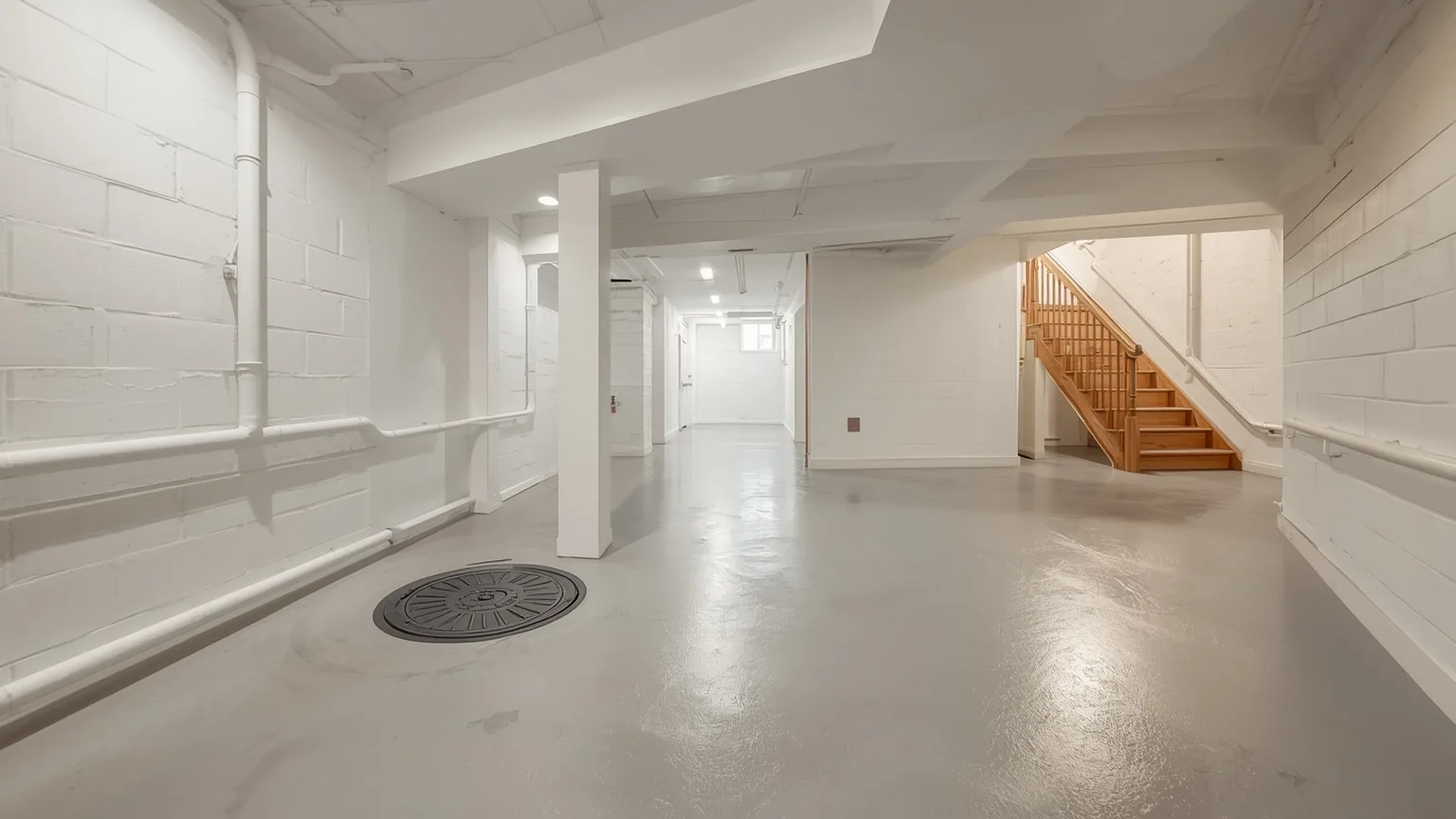
A wet Fort Wayne basement is almost never a rainfall problem — it is a clay problem. Blount and Glynwood till holds water against your foundation instead of draining it, and that pressure finds the weakest joint in the wall.
Wet Basement Repair
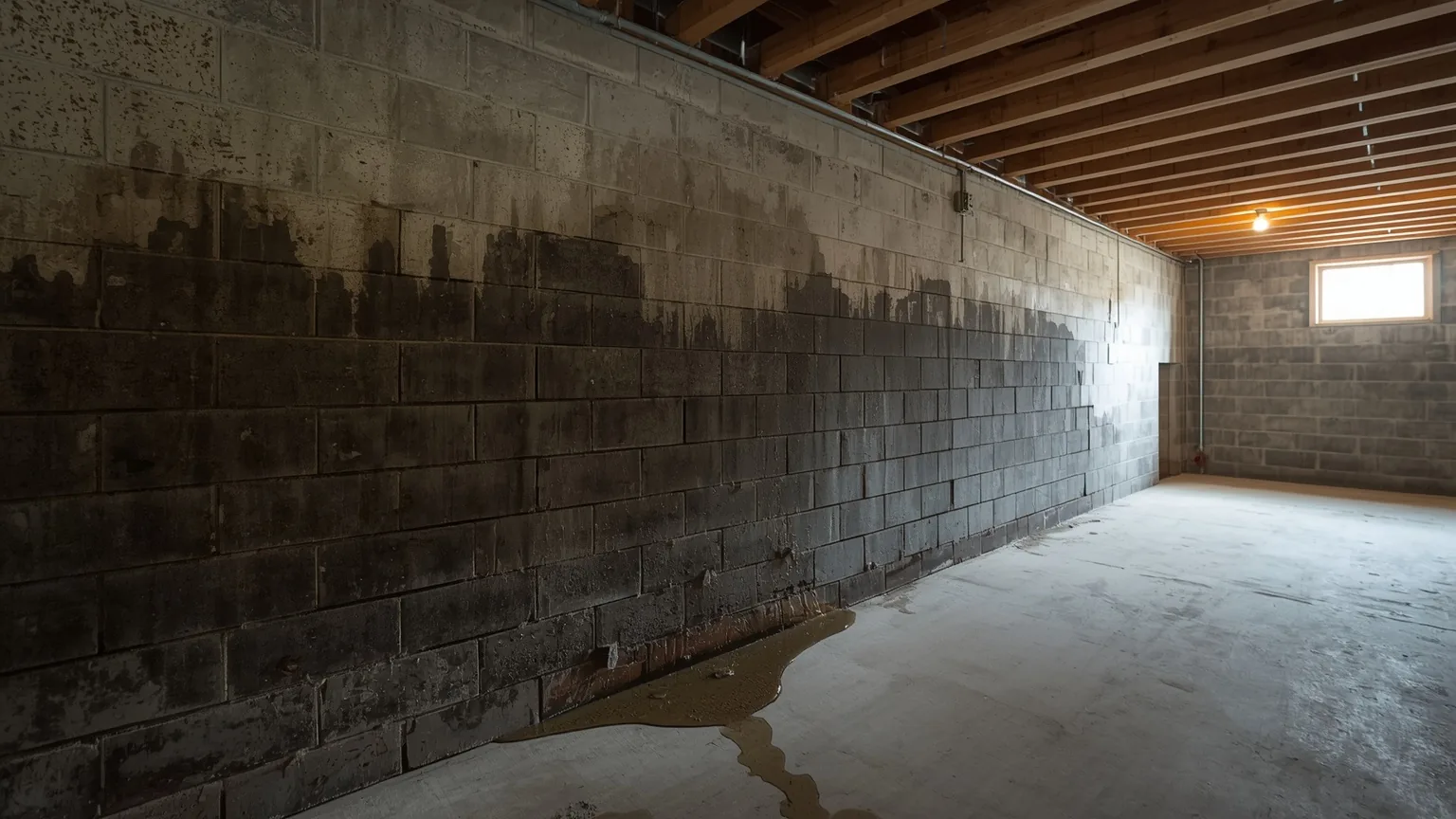
Water shows up in a basement through a small number of predictable paths. Finding which one is the whole job — the repair is straightforward once the entry point is known.
Exterior Basement Waterproofing
Exterior waterproofing stops water at the outside face of the wall, before it ever reaches the structure. It is the most thorough repair — and the most disruptive.
Find out what's actually causing it.
A free on-site inspection and a written scope — before any work is quoted.